News
News
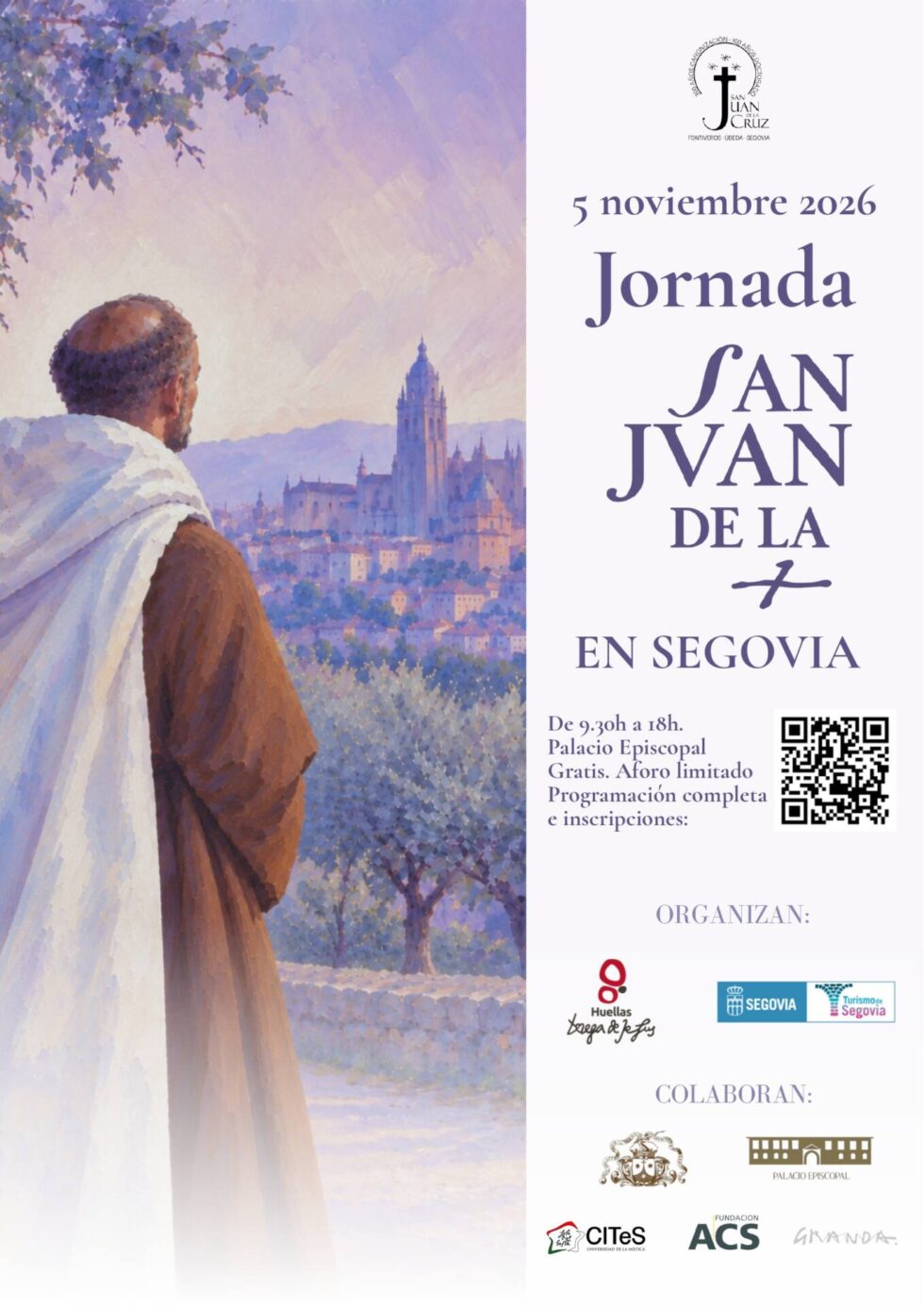
On November 5, 2026, the conference "Saint John of the Cross in Segovia" took place in Segovia, promoted by the Red Huellas de Teresa with the collaboration of the Segovia City Council.
The program consisted of three presentations focusing on different aspects of the figure of Saint John of the Cross and his relationship with Segovia:
- The cavernous ascents of the stone. A tomb for the mystic and poet John of the Cross, by Fr. Dr. Manuel Diego Sánchez, OCD, Discalced Carmelite, doctor in Ancient Christian Literature, researcher and historian of the Discalced Carmel, and professor at CITeS–University of Mysticism.
- Félix Granda and the tomb of Saint John of the Cross. Iconographic Meaning, given by Dr. Emilia González Martín del Río, doctor in Art History from the Complutense University of Madrid and researcher specializing in silverwork and artistic heritage.
- An early unknown poetry contest in honor of Saint John of the Cross in Segovia, by Dr. Esther Borrego Gutiérrez, professor of Spanish Literature at the Complutense University of Madrid.
The conference concluded with a presentation on the restoration of the tomb of Saint John of the Cross by Francisca Soto Morales, director of the Department of Conservation and Restoration at the Arte Granda workshops.
This initiative is part of the Huellas de Santa Teresa Chair of the International Teresian-Sanjuanist Center (CITeS)–University of Mysticism of Ávila and has the collaboration of the Carmelite Fathers and Mothers, the Cathedral of Segovia, and ACS Foundation.
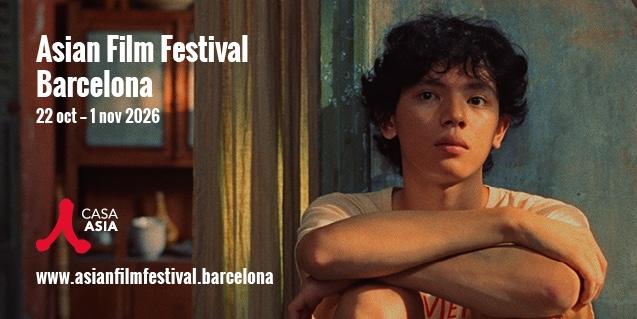
The Asian Film Festival Barcelona | AFFBCN, a festival of auteur Asian cinema whose aim is to showcase contemporary Asian film industries, was held between 22 October and 1 November 2026.
The fourteenth edition of this festival brought together more than a hundred films representative of the most recent Asian cinema across six different sections: Official, Official Panorama, Discoveries, NETPAC, Special and New Visions. The 128 selected cinematic works represented 25 countries from the Asia-Pacific region, produced mostly between 2025 and 2026, with India as the great protagonist of this edition, coinciding with the celebration of the Spain-India Dual Year 2026.
The screenings had as their main venues the Cinemes Girona, the Escola de Cinema de Barcelona (ECIB) and the Escola Superior de Cinema i Audiovisuals de Catalunya. The festival had the support of the Institut Català de les Empreses Culturals (ICEC), the Institut de Cultura de Barcelona (ICUB), the Hong Kong Economic and Trade Office Brussels (HKETO), the Fundació Institut Confuci Barcelona (FICB) and ACS Foundation, among other collaborating institutions.
Palmares of the 14th edition of AFFBCN here
Between October 2 and 13, 2026, the activities of the XXIII International Architecture Week took place, organized by the COAM Architecture Foundation, the Official College of Architects of Madrid, and the Madrid City Council, with the aim of bringing current architecture and urban planning closer to the general public. With Switzerland as the guest country, this edition made it possible to explore the links and influences on Madrid's architecture and to raise awareness of its architectural heritage.
The 12 days of activity featured more than 330 sessions and proposals for all audiences: lectures, exhibitions, guided tours, urban itineraries, etc., among which the exhibition on the work of Antonio Lamela at the COAM headquarters and the urban exhibition dedicated to Javier Carvajal Ferrer stand out, on the occasion of the centenary of the birth of both architects.
Seventy-five buildings or spaces opened their doors to the general public with guided tours, with new features such as the Casa de la Monta in Aranjuez, the French Lyceum Library, and the historic Renfe headquarters; and 48 guided urban walks were designed, with additions such as the Palomeras Linear Park, the Quinta del Duque del Arco, and Cerro del Viento. The program was completed with lectures, seminars, workshops, and cultural activities for all audiences.
This edition was co-organized by the Ibercaja Foundation, ACS Foundation, Cosentino, Sika, ERCO, Geberit, Roca-Laufen, and the ONCE Foundation, with the collaboration of ASEMAS, Baumit, HNA, Holcim, and Schindler.
Full information at https://www.semanaarquitecturamadrid.com/
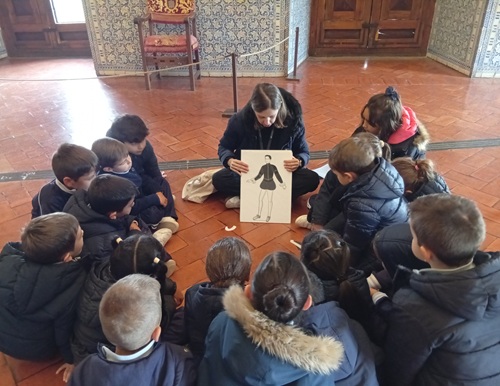
Patrimonio Nacional (Spain's National Heritage), with the support of ACS Foundation, launches the educational program "Discover the Royal Sites", with the aim of promoting architecture and heritage among primary and secondary school students, and raising awareness of Patrimonio Nacional as a unique cultural institution in the world.
The proposals being introduced for the 2026/27 school year are the following activities:
The Work of El Escorial. Visit to the Museum of Architecture for secondary school groups: The recently inaugurated Museum of Architecture at the Royal Monastery of El Escorial offers a visit focused on the construction of one of the most significant buildings in Spanish architecture, recognised by UNESCO for its architectural and construction values.
A King's Vision. Visit-workshop for primary school groups: Philip II built the Royal Monastery of El Escorial to commemorate the victory at the Battle of St. Quentin against the French and to create a funerary monument for his father, Emperor Charles V. The activity, in a visit-workshop format, allows participants to explore the Monastery and take part in a creative workshop.
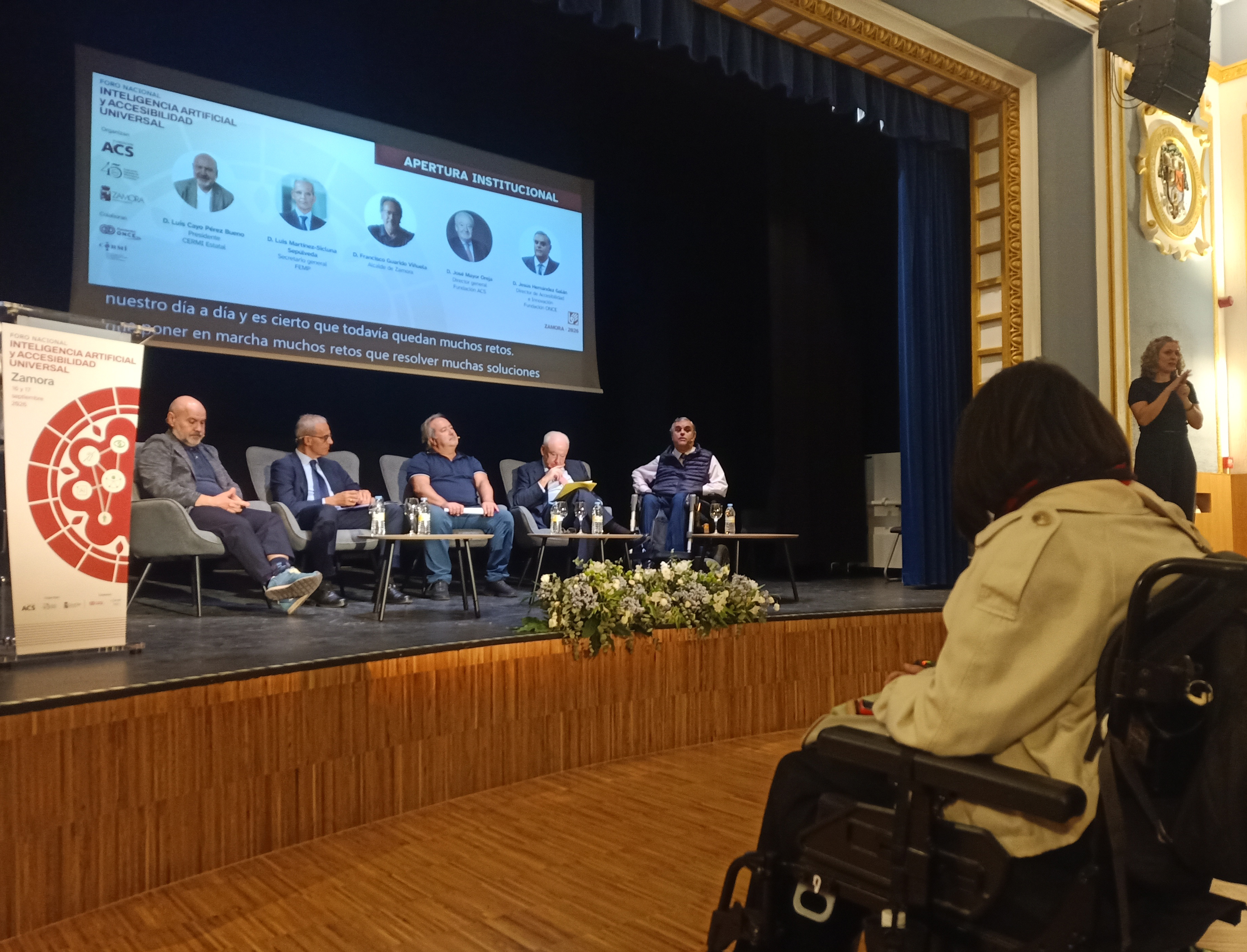
On 16 and 17 September, the city of Zamora hosted the National Forum on Artificial Intelligence for Inclusion and Universal Accessibility in Municipalities, organized by the Spanish Federation of Municipalities and Provinces (FEMP) and the Zamora City Council, with the collaboration of ACS Foundation, CERMI and ONCE Foundation.
The opening ceremony was attended by Francisco Guarido Viñuela, Mayor of Zamora; Luis Martínez-Sicluna Sepúlveda, Secretary General of the FEMP; Luis Cayo Pérez Bueno, President of CERMI; Jesús Hernández Galán, Director of Accessibility and Innovation at ONCE Foundation; and José Mayor Oreja, Director of ACS Foundation.
Representatives of public administrations, third-sector organizations, technology companies, experts and persons with disabilities shared experiences, identified challenges and opportunities, and promoted the development of innovative solutions that place inclusion and the rights of persons with disabilities at the centre of digital transformation.
The meeting concluded with the reading of the Zamora Declaration, open to all city councils to reaffirm their commitment to a technological transformation at the service of people, their rights and the improvement of public services.